
Independent Sources: Why Independence Matters
When managing your brand’s presence on Wikipedia, understanding the role of Independent Sources (WP:IS) is essential. Closely related to reliable sourcing, independence ensures that coverage comes from unaffiliated third parties rather than company-controlled materials. Using such sources establish credibility and neutrality by ensuring that content isn’t reliant on materials tied to the subject itself. Here’s what you need to know.
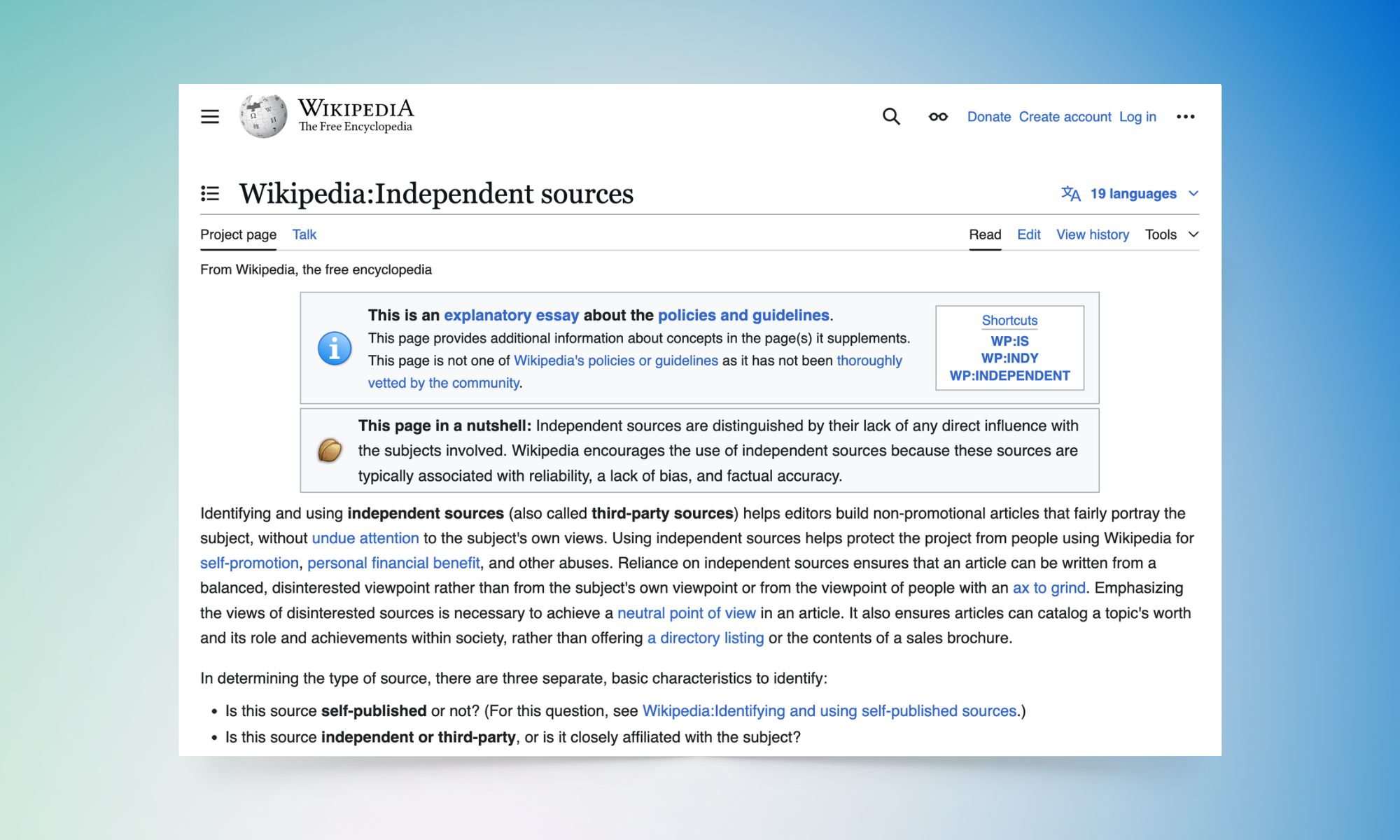
What Are Independent Sources?
Independent sources are those that are entirely unaffiliated with your brand. They provide a third-party perspective, offering evaluations or reports without any direct involvement or influence from the subject.
Examples of independent sources: Respected news outlets, industry publications, books by reputable authors, or academic journals that cover your brand or its activities without collaboration.
What’s not independent: Press releases, your brand’s website, content paid for by your company, or anything written by individuals or entities connected to your brand.
Independent sources are those that are entirely unaffiliated with your brand. They have no direct financial, personal, or organizational ties to your organization. Respected news outlets, academic journals, and industry publications are examples of sources that can demonstrate credibility—although things become murkier when they write about themselves. Likewise, a well-researched history of a major company is likely to be considered reliable—unless it was sponsored by the company itself.
Press releases, corporate blogs, and promotional materials—even if published in high-profile outlets—fail this test. Similarly, content created through paid partnerships or advertorial arrangements lacks the necessary independence to be considered reliable. Trickier still are press release rewrites—articles that look like news reporting, yet only repeat information in official announcements. The key distinction is whether a source is reporting on your brand organically or whether the coverage was influenced, controlled, or commissioned by your company.
Why Independence Matters
Wikipedia prioritizes independent sources because they reduce bias. Articles that rely too heavily on self-published or non-independent materials risk being flagged as promotional or unreliable. Independence also plays a key role in notability—Wikipedia requires brands to demonstrate that they have received meaningful coverage beyond their own marketing efforts. If only self-published content exists, Wikipedia may determine that the brand lacks the significance needed for an article.
Beyond eligibility, independent sourcing helps shape an article’s tone and content. Articles based on neutral reporting present a balanced view, while those dominated by company-controlled messaging may face scrutiny. Wikipedia’s goal is to reflect how the public and media perceive a subject, not how the brand prefers to be represented.
Key Features of Independent Sources
Not all third-party sources are truly independent. Wikipedia evaluates independence based on whether a source is free from influence, provides genuine analysis, and follows strong editorial standards.
No Direct Ties to Your Brand – The source must not be owned, funded, or controlled by your company, executives, investors, PR team, or affiliated organizations.
Unbiased Third-Party Perspective – The source should evaluate your brand on its own merits, rather than repeating your messaging or relying solely on company statements.
Journalistic Integrity – Established publications with fact-checking and editorial oversight are preferred over blogs, trade sites, or contributor-based platforms.
Not Commissioned or Paid For – Sponsored content, advertorials, or articles resulting from paid collaborations do not count as independent, even if they appear in respected outlets.
Significant Coverage – A strong independent source offers in-depth reporting, not just a passing mention or superficial rewrite of a press release.
For example, if The Wall Street Journal publishes a feature article analyzing your company’s market position, it’s independent. If they run a sponsored post that you paid for, it’s not. Understanding these distinctions ensures your Wikipedia article is built on sources that meet neutrality and reliability standards.
Evaluating Independence
Is the author or publisher unaffiliated with your brand?
Does the source offer original analysis or commentary?
Is there a financial connection?
Was the coverage unsolicited?
What to Avoid: Sources That Don’t Meet Independence Standards
Certain sources may seem credible but fail Wikipedia’s independence test due to their close association with the subject. Using these can weaken an article’s neutrality and lead to content being challenged or removed.
Press Releases and Rewrites – Even when republished by reputable outlets, press releases remain corporate statements, not independent journalism. Some outlets lightly rewrite press releases without additional reporting, making them unreliable for Wikipedia.
Company Websites and Blogs – Official websites, blogs, and leadership statements are self-published and can only verify basic, uncontroversial facts (e.g., founding year, executive team). Claims about achievements or industry impact require independent sources.
Paid Media, Advertorials, and Sponsored Content – Articles or features paid for by a company, even in respected publications, fail Wikipedia’s independence test. This includes sponsored content, pay-for-play articles, and influencer partnerships.
Company-Commissioned Books – A brand-sponsored history book or executive memoir is not independent unless it has been critically reviewed by an unaffiliated, reputable source. Without independent analysis, these are considered promotional.
Investor Reports and Regulatory Filings – SEC filings and annual reports contain verifiable data but are still corporate self-published materials. They can confirm financials but not broader claims about a company’s reputation or achievements.
Interview-Style Content (Podcasts, Q&As, Video Features) – Executive interviews, even in reputable media, reflect the subject’s own perspective rather than independent reporting. Unless the piece includes substantial editorial analysis, it does not qualify as independent.